Health & Safety Policy — House Clearance Hackbridge
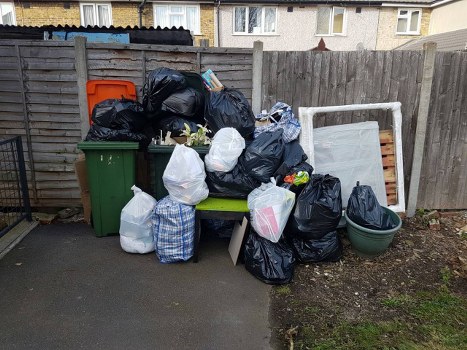 House Clearance Hackbridge is committed to maintaining a safe working environment for staff, contractors and the public during all house clearance and rubbish removal in Hackbridge activities. This policy sets out the approach to hazard identification, risk assessment and control measures applied across our clearance and waste disposal services. It applies to every project we undertake, whether clearing a single room, a full property or providing general rubbish clearance and skip services in the service area.
Our priorities are to prevent injury, protect health and reduce environmental harm. All employees and subcontractors engaged in Hackbridge house clearance operations must understand their responsibilities. Managers will ensure that adequate resources are provided for training, equipment and supervision. We emphasise safe systems of work, correct use of personal protective equipment and regular inspection of tools and vehicles.
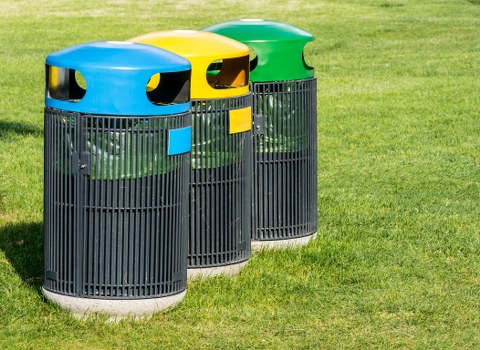 The company conducts documented risk assessments before work begins. Those assessments address manual handling risks, sharps and hazardous materials, working at height, electrical hazards, vehicle loading, and potential asbestos or chemical contaminants. Control measures follow the hierarchy of risk control and include elimination, substitution, engineering controls, administrative controls and the provision of appropriate PPE such as gloves, safety footwear, hi-vis clothing and respiratory protection where necessary.
Operational Safety for Rubbish Clearance and Removal Services
Safe operating procedures are established for all routine activities connected with rubbish clearance, waste removal and estate clearance. These procedures cover site set-up, safe access and egress, segregation of recyclables and hazardous waste, correct use of lifting aids and trolleys, and safe loading of vehicles. Staff are trained in manual handling techniques to reduce the incidence of musculoskeletal injury and are instructed to stop work and seek assistance if a load is too heavy or awkward.
Specific Controls and Training
 All operatives receive induction training that includes safe use of tools, awareness of sharp objects and contaminated waste, traffic management when removing bulk items from driveways or public highways, and the correct procedures for reporting incidents. Refresher training is provided periodically and following any significant change in working methods. We maintain records of training, qualifications and equipment checks so that competence can be demonstrated at all times.
Essential controls include maintaining a clean work area to prevent slips, trips and falls; clear labelling of waste containers; and using mechanical aids for heavy or bulky items. The following list summarises key controls:
- Pre-work risk assessment and job briefing
- Mandatory PPE for all operatives
- Safe lifting techniques and use of lifting equipment
- Segregation and secure containment of hazardous materials
- Vehicle safety checks and load restraint procedures
Emergency procedures are established and communicated to all staff. These include arrangements for first aid, fire response, dealing with spillages and contacting emergency services. A nominated first aider must be present on larger clearances and first aid kits are provided on all sites. Incident reporting is mandatory: all accidents, near misses and unsafe conditions must be reported without delay so that corrective actions can be implemented.
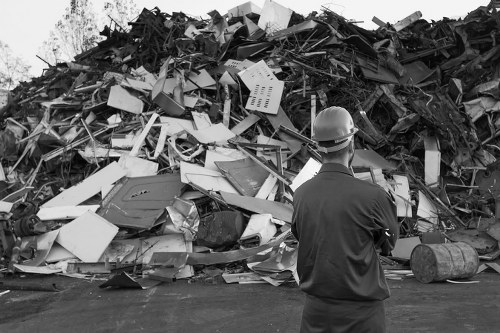 We maintain a robust waste handling and disposal protocol to ensure compliance with environmental obligations. Waste is sorted at source where possible to maximise recycling and to prevent cross-contamination. Hazardous items—such as batteries, solvents, asbestos-containing materials and electrical appliances—are identified and handled in accordance with statutory guidance. Secure transit and lawful disposal routes are used for all waste streams to protect public health and the environment.
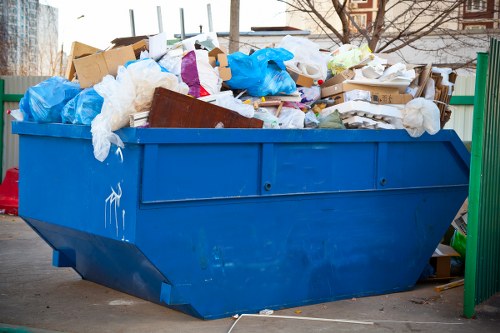 Roles and responsibilities are clearly defined: senior management retain overall responsibility for health and safety policy and its review; supervisors and team leads are responsible for implementing safe systems of work on site; operatives must follow instructions, use equipment correctly and report hazards. We expect everyone to act with due diligence and to foster an open safety culture where concerns can be raised without fear of reprisal.
The company undertakes regular monitoring and review of safety performance through site inspections, toolbox talks and safety audits. Performance indicators include the number of incidents, near misses, training completions and equipment inspections. Findings are used to update procedures and to target improvements so that our house clearance and rubbish collection operations continually evolve to meet best practice.
Legal and regulatory compliance is a fundamental element of this policy. We aim to meet applicable health, safety and environmental standards and to respond promptly to changes in legislation or guidance affecting house clearance, bulky waste collection, and rubbish removal services. Records demonstrating compliance are maintained and made available for management review and auditing purposes.
Policy review and continuous improvement: This policy is reviewed at least annually and following any significant incident, change in operations or legislation. Management will communicate revisions and ensure that staff training and resources keep pace with procedural changes. By embedding safety into everyday practice, our clearance company aims to protect people, property and the environment while delivering reliable house clearance services across the service area.